Contact/Contacto: paola.rumo@gmail.com
https://www.instagram.com/paolaruizmolto/
Universidad Jaime I, Castellón (Spain)
ABOUT PAOLA RUIZ-MOLTÓ En los últimos años, misteriosas criaturas marinas han sido avistadas a lo largo de la costa del Mar Mediterráneo, más concretamente en la costa blanca. Según el Departamento de Zoología de la Universidad de Alicante, esta especie es conocida como “El Glaucus Azul”, por lo que también se le llama “Dragón Azul” o “Mariposa Marina”, estos diminutos seres acuáticos pueden llegar a medir hasta tres o cuatro centímetros de largo. Tan extraordinario encuentro llama la atención, ya que esta especie no ha sido vista en el mar Mediterráneo desde hace más de 300 años, de hecho, suele vivir en aguas tropicales, muchos expertos interpretan que puede deberse al aumento de la temperatura del mar. Éste, fue el origen de los últimos proyectos, el interrogante –elmar–,preocupación por la biosfera marina, el poder del micro mundo que vive en las profundidades del océano, tan extraordinario para generar vida y soportar un lapso de siglos. Encuentros con la suciedad, barro, moho, bacterias., me conducen a interpretar la escultura como un ser vivo, cuyas arterias transmiten agua y energía, en el que la red eléctrica funciona como un sistema nervioso. Para volver a imaginar el pasado, el presente y el futuro oceánico de la Tierra, este proyecto a/r/tográfico socioambiental, especula sobre posibles historias de relaciones entre especies, con énfasis en el fitoplancton, observaremos pequeños organismos acuáticos en un mundo de ficción, muestras tomadas en áreas contaminadas, que muestran una realidad, tan segura de sí misma, que se equivoca y revela que ninguna certeza es cierta. Finalmente, es importante situar al lector, que la investigación tiene un carácter eminentemente visual, nos sumerge en los fondos salvajes marinos, la interpretación de datos visuales obtenidos como resultados de la investigación, ayudan a reflexionar acerca de la emergencia climática, del proceso de aprendizaje y permite profundizar en contenidos curriculares expuestos en la propuesta docente. Hay mucho material de investigación que tiene intención de salir poco a poco durante la propuesta y otra parte saldrá en el futuro, los procesos son siempre muy tentaculares y distribuidos, por hacer referencia a Haraway (2016). | In recent years, mysterious sea creatures have been sighted along the coast of the Mediterranean Sea, more specifically along the Costa Blanca. According to the Zoology Department of the University of Alicante, this species is known as “The Blue Glaucus”, so it is also called “Blue Dragon” or “Marine Butterfly”, these tiny aquatic creatures can measure up to three or four centimetres long. Such an extraordinary encounter is striking, as this species has not been seen in the Mediterranean Sea for more than 300 years, in fact, it usually lives in tropical waters, many experts interpret that it may be due to the increase in sea temperature. This was the origin of recent projects, the question – the sea –, concern for the marine biosphere, the power of the micro world that lives in the depths of the ocean, so extraordinary to generate life and support a span of centuries. Encounters with dirt, mud, mould, bacteria, lead me to interpret the sculpture as a living being, whose arteries transmit water and energy, in which the electrical network functions as a nervous system. To re-imagine the past, the present and the oceanic future of the Earth, this socio-environmental a/r/tographic project speculates on possible histories of relationships between species, with an emphasis on phytoplankton, we will observe small aquatic organisms in a fictional world, samples taken in polluted areas, showing a reality, so sure of itself, that it is wrong and reveals that no certainty is certain. Finally, it is important to point out to the reader that the research has an eminently visual character, immersing us in the wild seabed, the interpretation of visual data obtained as a result of the research helps us to reflect on the climatic emergency, the learning process and allows us to go deeper into the curricular contents set out in the teaching proposal. There is a lot of research material that intends to come out little by little during the proposal and some of it will come out in the future, the processes are always very tentacular and distributed, to refer to Haraway (2016). |
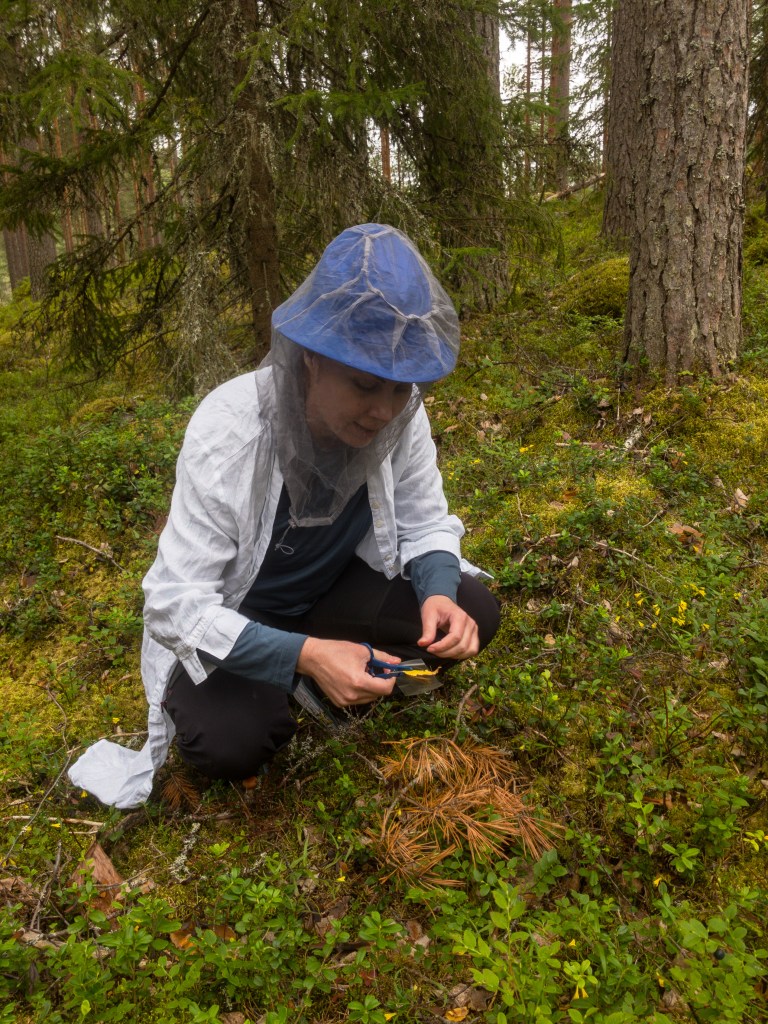
| BIO + Info Eco-Artista y profesora del Departamento de Educación, miembro del Grupo de Investigación en Artes Visuales y Educación (RAVE) y del Grupo de Innovación Docente Arte y Didáctica (ARDID), secretaria del Departamento de Educación y Didácticas Específicas (2021-2023) de la Universidad Jaume I,Castellón. Actualmente coordinadora para el seguimiento de la calidad del Grado de Maestro en Educación Primaria (UJI). La autora es Doctora en Bellas Artes por la Universidad Complutense de Madrid (2009), Sobresaliente Cum laude. Licenciada en Bellas Artes por la Universidad Politécnica de Valencia (2003). Su docencia se centra en el área de Didáctica de la Expresión Plástica y la especialidad de Artes Visuales en el máster de profesorado (UJI). Ha colaborado con el grupo de investigación Posthumanities Hub de la Universidad de Linköping, Suecia (2023-en curso). Los intereses de investigación de la autora incluyen la redefinición del espacio escultórico y la exploración de las conexiones entre éste y el arte sonoro, la A/r/tografía socioambiental y la investigación basada en las artes, la biología especulativa, la Eco(estética), la “pseudociencia”, las ecologías humanas y más-que-humanas. Además, les interesa explorar los extraordinarios misterios que esconden las profundidades de los océanos y utilizar la inteligencia artificial en el ámbito artístico. Esta actividad multidisciplinar implica el desarrollo artístico-científico, premios, becas y exposiciones. Se complementa con estancias de investigación artística tanto a nivel nacional como internacional, incluyendo países como España, China, Noruega y Finlandia, Suecia.. | Eco-Artist and professor of the Department of Education, member of the Research Group in Visual Arts and Education (RAVE) and Group of Teaching Innovation Art and Didactics (ARDID), secretary of the Department of Education and Specific Didactics (2021-2023) of the University Jaume I, Castellón (Spain). Currently coordinator for the quality monitoring of the Degree of Teacher in Primary Education (UJI). The author holds a PhD in Fine Arts from the Complutense University of Madrid (2009), Summa Cum Laude. Bachelor of Fine Arts from the Polytechnic University of Valencia (2003). Her teaching focuses on the area of Didactics of Plastic Expression and the specialty of Visual Arts in the master’s degree in teaching (UJI). She has collaborated with the Posthumanities Hub research group at Linköping University, Sweden (2023-ongoing) The author’s research interests include redefining sculptural space and exploring the connections between it and sound art, socio-environmental A/r/tography and arts-based research, speculative biology, Eco(aesthetics), “pseudo-science”, human and more-than-human ecologies. Additionally, they are interested in exploring the extraordinary mysteries hidden in the depths of the oceans and using artificial intelligence in the artistic field. This multidisciplinary activity involves artistic-scientific development, awards, scholarships, and exhibitions. It is complemented by artistic research stays both nationally and internationally, including countries such as Spain, China, Norway, and Finland, Sweden.. |
 Paola Ruiz Moltó, Ph.D
You must be logged in to post a comment.